
Modeling Research Organizations as Embedding Spaces
Friday, April 17, 2026 · 2:35 PM – 3:05 PM · Violet Crown Charlottesville
Institutions, particularly universities, face increasing pressure to improve funding outcomes while sustaining intellectual diversity. Yet organizational modeling of research ecosystems remains underdeveloped. We leverage large-scale datasets generated through the conduct of science—publications, submitted proposals, and collaboration networks—to study how institutions organize expertise and how these structures relate to future funding success.
This talk introduces a data-driven framework for modeling a research organization as a continuous landscape that moves beyond fixed partitions, where field size becomes volume, similarity becomes distance, and overlap becomes measurable interdisciplinary structure. As an example, we use an institutional dashboard that visualizes a university’s research activity in this space, illustrating practical design principles for organizational analytics.
Viewing science as an interconnected ecosystem, we then zoom into the micro level: individual expertise representation. A simple centroid of prior publications proves insufficient in high-dimensional embedding space, as it collapses heterogeneous research trajectories into a single point. To address this limitation, we introduce a multi-centroid representation that captures the internal diversity of a researcher’s expertise.
Using this representation, we present preliminary empirical results examining how proposal–expert alignment relates to funding success, offering a more nuanced understanding of alignment and selection dynamics. We conclude by outlining how this framework can extend toward predictive modeling and expert recommendation systems, linking organizational structure to strategic decision support.
This session will benefit research administrators and data scientists interested in organizational modeling. A basic understanding of embedding representations and applied machine learning is helpful but not required.
About the Speaker
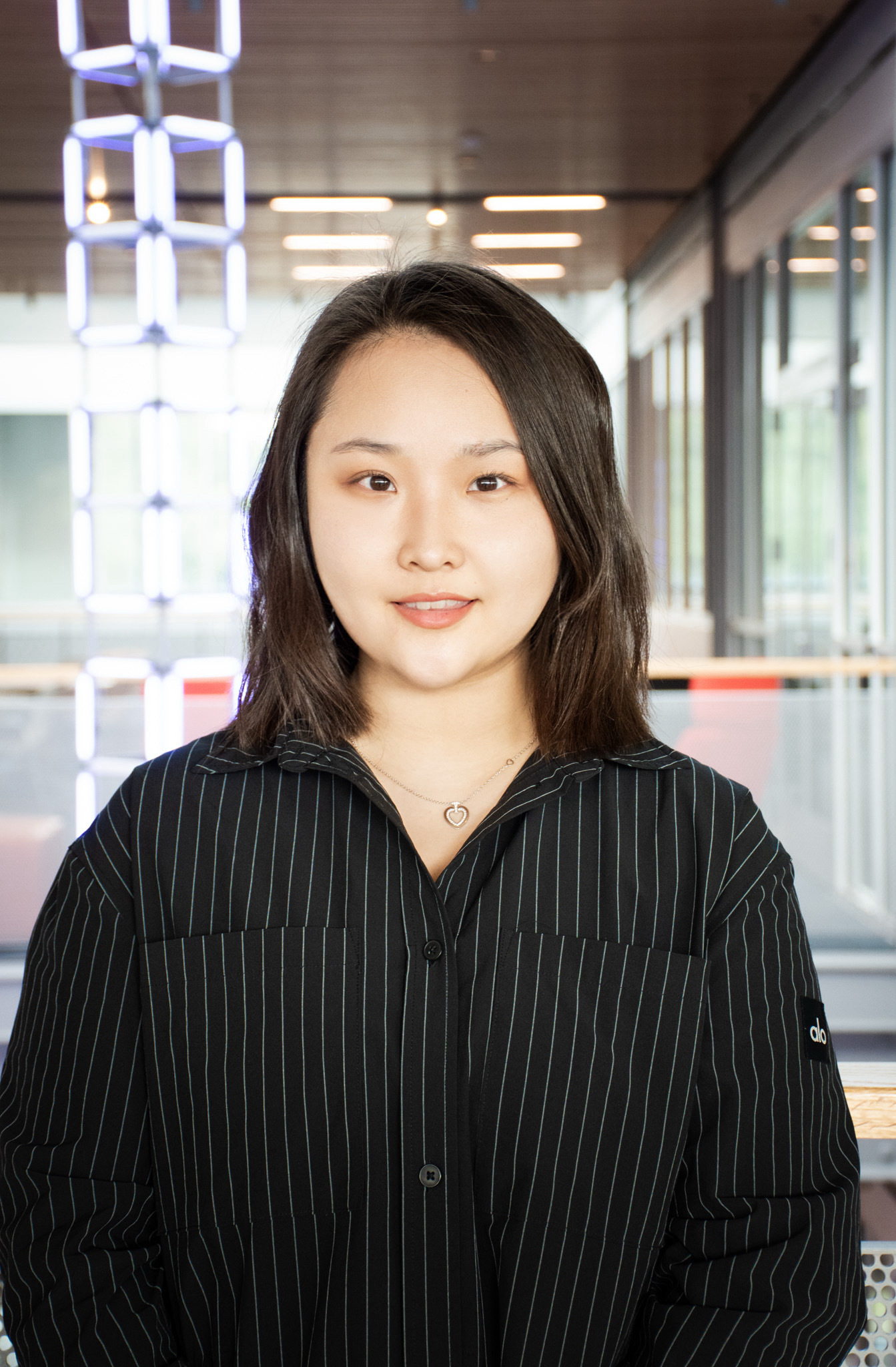
Qianyi Shen
PhD student in Data Science at University of Virginia
Qianyi Shen is a first-year PhD student in Data Science at the University of Virginia. Her research interests focus on computational social science and network science, particularly the study of complex systems through data-driven methods. Prior to joining UVA, she earned her master’s and bachelor’s degrees in statistics from Cornell University and Arizona State University, respectively.