
Call for Proposals
The Call for Proposals for the 2026 Applied Machine Learning Conference is now open. We are seeking proposals for 30-minute talks and 90-minute tutorials that share knowledge, insights, and practical experience in data science, AI, machine learning, and related fields. Whether this is your first conference talk or your fiftieth, we’re looking for speakers from a variety of backgrounds and experience levels.
Speakers will receive a free ticket for the entire event. All presentations will be given live and in-person. Please note that speakers are responsible for providing their own travel and lodging accommodations.
Submission Deadline
The deadline to submit proposals to the 2026 Applied Machine Learning Conference is Sunday, February 22, at 11:59pm AoE (Anywhere on Earth). As long as it’s still Sunday, February 22 somewhere on the planet, you may submit a proposal!
Suggested Topic Areas
The Program Committee welcomes proposals for talks and tutorials covering a wide range of topics related to data science, AI, machine learning, scientific computing, and related fields. Suggested topic areas include, but are not limited to:
- Applied Machine Learning: Applications of data science and ML methods in a variety of domains, such as healthcare, biotechnology, finance, climate, energy, social sciences, or others; case studies of ML in production; lessons learned from real-world deployments
- AI & Large Language Models: LLM application development, prompt engineering, retrieval-augmented generation (RAG), agentic systems, fine-tuning, evaluation and benchmarking, interpretability
- Machine Learning Methods: Computer vision, embeddings and vector search, recommendation systems, geospatial data analysis, time series forecasting, NLP beyond LLMs, reinforcement learning
- Tools, Infrastructure & Engineering: MLOps and model deployment, data pipelines, feature stores, experiment tracking, cloud and edge computing, open-source tools and frameworks
- Data Analysis & Visualization: Exploratory data analysis, tools and methods for data visualization, dashboards and analytics, communicating insights from data effectively
- Classical Modeling Approaches: Statistical methods, causal inference, probabilistic programming, simulation modeling, network science, reproducible research
- Organizational and Societal Context: Managing data science and AI projects in a company setting; the data science and AI job market; ethics, responsibility, and fairness in data science and AI initiatives; data security, privacy, and regulatory concerns; and so on
Session Types
The 2026 Applied Machine Learning Conference will feature two main types of sessions: talks and tutorials.
Talks: Friday, April 17
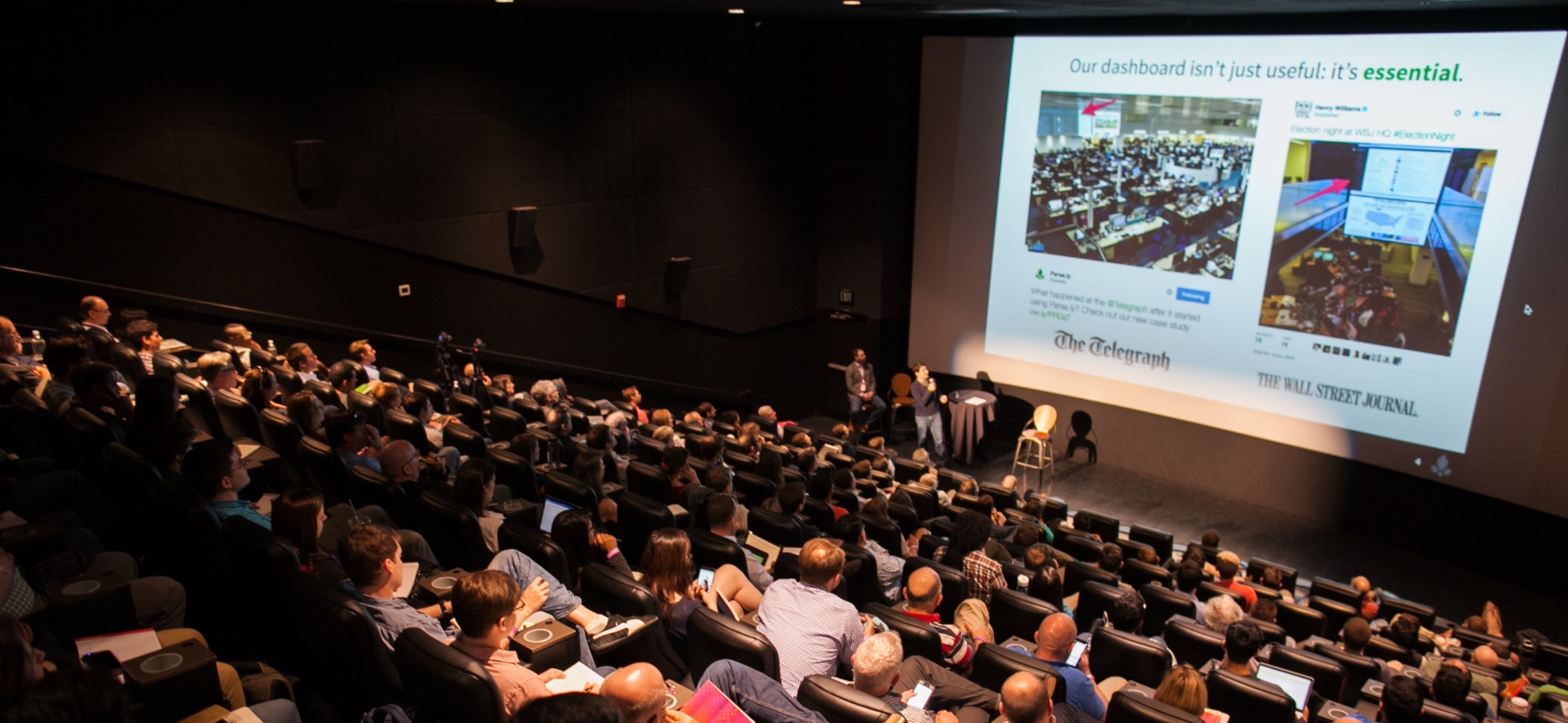
Talks are 30-minute presentations, including time for audience Q&A. They often include slides and demos, and tend to feature less audience interaction than tutorials. All talks will be delivered on the first day, Friday, April 17, at the Violet Crown Cinema, an upscale movie theater in downtown Charlottesville. See your work projected on the big screen like never before!
Tutorials: Saturday, April 18
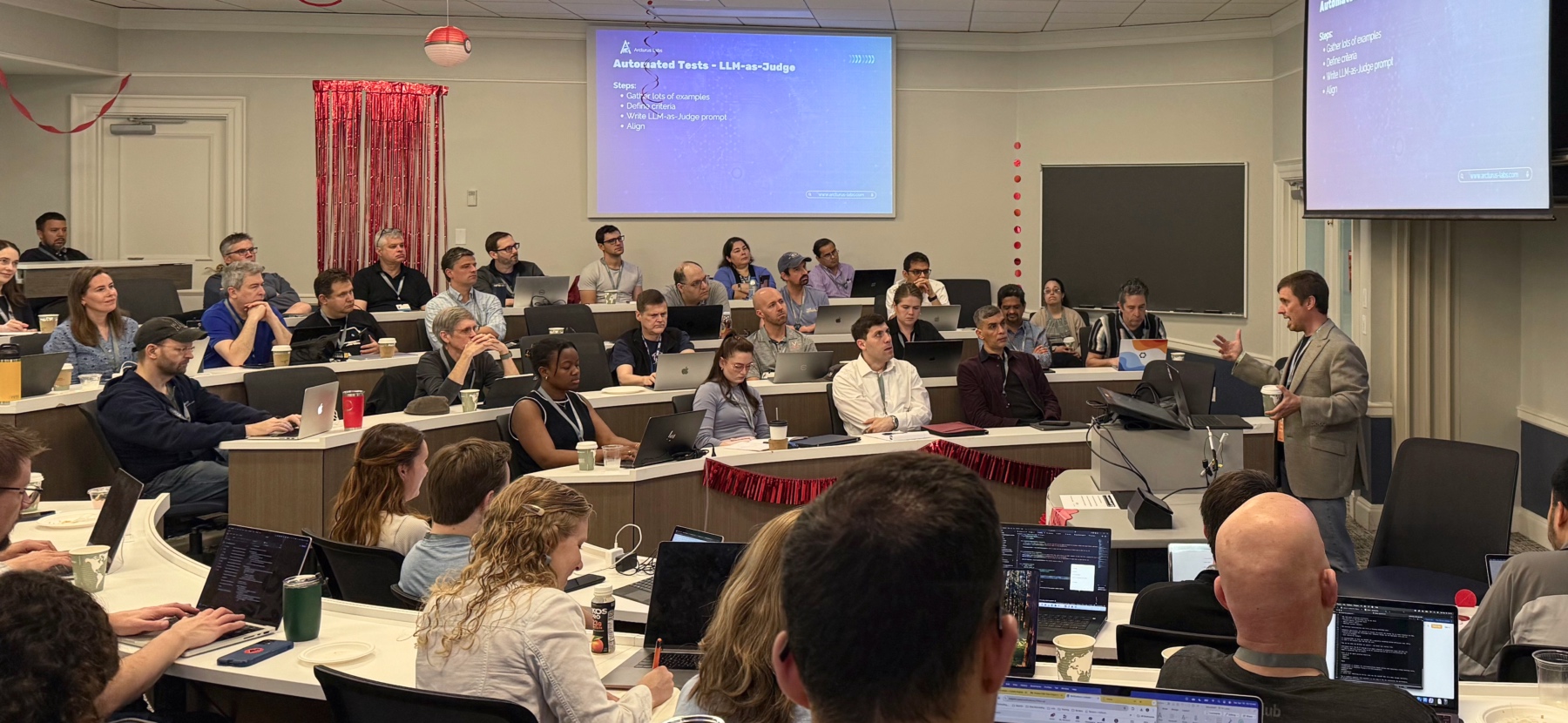
Tutorials are longer 90-minute sessions that more closely resemble a classroom setting. They tend to dive deeper into how to use a particular tool, technique, framework, modeling methodology used by modern data science and AI researchers and practitioners. They usually offer more opportunities for audience interaction, such as live demonstrations, coding along, or hands-on exercises. Tutorials often also include additional resources for participants to use during the session, such as code repositories, example datasets, hosted computational notebooks, and so on.
All tutorials will be delivered on the second day, Saturday, April 18, at the University of Virginia School of Data Science.
What Makes a Strong Proposal?
A proposal has two jobs: to persuade the Program Committee to accept your session, and to convince conference attendees to show up. If your proposal is accepted, the session title and description you submit will appear in the conference program, so write them with both of these audiences in mind.
Strong proposals typically include:
- What the topic is and why it matters right now
- Who will benefit most from attending (and what background knowledge they’ll need)
- The central ideas or techniques you’ll cover
- Concrete takeaways the audience can expect
After reading your description, a conference attendee should have a clear sense of what your session is about and whether it’s right for them.
A few tips:
- Consider asking friends and colleagues with relevant experience to review your proposal and provide feedback before submitting it.
- For tutorials, consider highlighting what attendees will be able to do afterward, and mention any technical prerequisites they’ll need.
- We especially welcome proposals featuring open-source tools and frameworks that attendees can explore and use themselves afterward.
- Proposals that appear to be sales pitches for commercial products and services are unlikely to be accepted. We encourage vendors to consider our sponsorship options as an alternative way to engage with the Applied Machine Learning Conference audience.